Gone Before the Lunch Bell: How Keswick’s Sweet Counter Sets the Pace of the Day
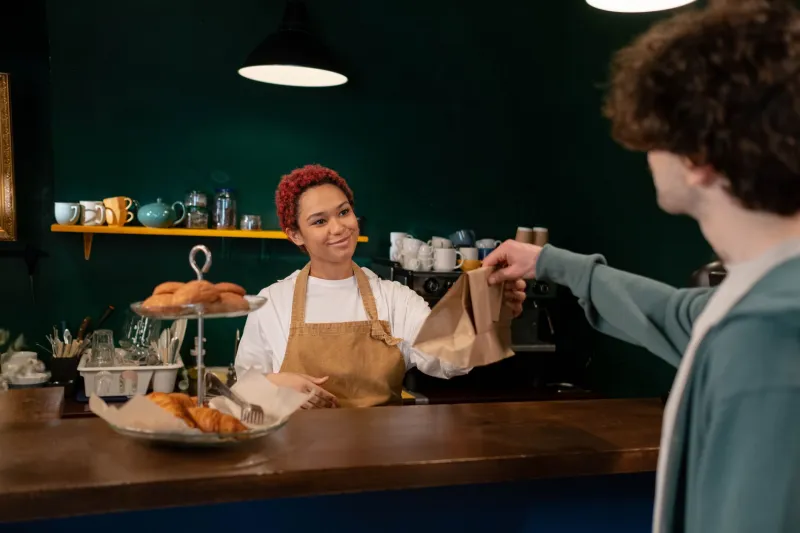
There is a particular sound a sweet counter makes when it is working well. It is not the till, exactly, nor the hiss of the coffee machine. It is the soft shuffle of paper bags being opened, the tap of tongs against a tray, and the quiet sigh of a bake that has just been lifted into its last available spot. By midday in Keswick, that sound has usually given way to something else: the clean, slightly smug look of an empty tin.
People often ask which cake they should try. A better question, if you want the full picture, is when they should try it. Because the sweet counter does not empty at random. It empties in a pattern, and that pattern is written by the town’s morning habits as much as by our own baking schedule.
The first wave belongs to the early risers
Long before the shops on the high street have properly settled into their day, there is already movement in Keswick. Walkers are filling flasks, dog owners are stretching their legs along the river, and a certain kind of visitor has worked out that the fells are best met before the cloud has made up its mind. These are the people who arrive at the counter with a rucksack on one shoulder and a very specific request: something sturdy, something sweet, something that will survive a morning in a top pocket.
That is why the first tray to come under pressure tends to be the gingerbread. Not because it is the only good thing on offer — far from it — but because it makes sense. A slice of dark, sticky gingerbread travels well, improves with a little time in a bag, and has enough spice to feel like a proper companion on a cool morning. The loaf sits near the front, sliced and ready, and by the time the first coach party has drifted through, it is often down to the final few pieces.
Flapjack follows close behind. It is the quiet hero of the early counter: oaty, chewy, and just sweet enough to feel like a treat without asking too much of anyone about to climb Catbells. Visitors sometimes tell us they buy one for the summit and one for the car. We have learned not to argue.
Mid-morning is for the traybakes
Somewhere between the first rush and the lunchtime browse, the counter changes character. The walkers have gone up the hill. The town has filled with people who are taking their time. This is when the traybakes come into their own: millionaire’s shortbread with its neat layers, chocolate tiffin cut into generous squares, perhaps a batch of caramel shortbread if the mood in the bakery has turned indulgent.
These are the bakes that tend to vanish in clusters rather than singles. One person buys a square, then another sees it and decides they would like the same, and before long the tray has that slightly ragged look of a good afternoon ahead. Traybakes are also the great peacekeepers of a family group. They are easy to share, easy to wrap, and easy to justify as “just a small piece” even when the piece is not small at all.
If you are visiting with children, this is the window to aim for. The choice is usually still wide, the counter is lively without being crowded, and there is a decent chance of getting a table near the window if the weather has turned. In Keswick, that is always a consideration.
Why some bakes go first
It would be easy to say that the most popular bakes are simply the ones that taste best. That is true, but it is not the whole story. Sell-out patterns are shaped by practical things: how well a cake travels, how neatly it slices, whether it feels like a snack or a sit-down treat, and how familiar it is to the person buying it.
Gingerbread, for instance, has a long association with this part of the world. It feels local without being fussy. A visitor who has come for the lakes and the fells often wants something that tastes like the place they have just walked through, and a dark, warming slice of gingerbread does that better than a plain sponge ever could. It also keeps well, which matters to anyone planning a day out.
Scones are a different sort of sell-out. They tend to go in a burst around late morning, when people decide that a coffee and something with jam is a sensible idea. On a wet day, that burst comes earlier and lasts longer. On a bright day, it can be surprisingly quiet until the walkers come back down. We have learned to read the sky as much as the clock.
The lunchtime lull that is not really a lull
By noon, the counter can look picked over, but that does not mean the day is finished. It means the first shift of baking has done its job. Behind the scenes, there is usually another tray coming through: something softer, perhaps, or a fresh batch of something that sold out faster than expected. The shop does not simply bake once and hope for the best. It watches, adjusts, and fills the gaps.
This is the part of bakery life that customers rarely see. A tray of brownies that disappeared by half past ten might be followed by another batch at one. A quiet morning for custard tarts might mean a smaller bake the next day. The decision is not made by a spreadsheet alone. It is made by the person who has been standing at the counter, noticing what people ask for and what they hesitate over.
How tomorrow’s bake list gets written
Every afternoon, the same conversation happens in some form. What went first? What lingered? Was it the weather, the coaches, the school holidays, or something less obvious? A wet Tuesday in November is not the same as a sunny Saturday in July, and the counter has to reflect that. In 2026, with visitor patterns shifting as they always do, the useful information is still local: who came in, what they bought, and what they wished we had more of.
So tomorrow’s list is part instinct and part evidence. More gingerbread if the forecast looks crisp and walkable. More traybakes if a coach is due. A smaller batch of something delicate if the day looks quiet. And always, always, a few extra flapjacks, because someone will inevitably ask for one just as the last has gone.
When to visit if you have your heart set on something
If there is a particular bake you are hoping for, the safest advice is simple: come earlier than you think. The counter is at its fullest in the first couple of hours, and the most travelled bakes are usually the first to go. If you are after gingerbread, aim for the morning. If you want the widest choice of traybakes, mid-morning is a good bet. If you are happy to take pot luck and enjoy whatever is fresh from the oven, early afternoon can be a lovely time to call in — quieter, calmer, and often full of the smell of whatever has just been baked.
And if the tray you wanted is empty, ask. Sometimes there is more coming. Sometimes there is a very good reason it sold out. Either way, the answer will usually come with a suggestion, because a sweet counter is not really about what is missing. It is about what is still there, waiting to be wrapped in paper and carried out into the Keswick air.