The Favours Guests Slip in Their Pockets: A Keswick Wedding Sweet Guide
Start with what people actually eat
There is a particular kind of wedding favour that looks lovely in a photograph and then spends the next forty years in a drawer. We have all seen it: a tiny silver heart, a ribboned almond, a seed packet with a name printed so small it could be a medical prescription. The favours that make it home — the ones guests actually slip into a pocket or a handbag — are almost always edible. Better still, they are edible and local.
Here in Keswick, that gives you a head start. A wedding favour from a Cumbrian sweet shop is not just a gesture; it is a small piece of the place your guests have travelled to. It tastes of something. It starts conversations on the drive home. And, crucially, it does not need dusting.
The arithmetic of a happy table
Before you fall in love with a ribbon colour, do the sums. The old rule of one favour per guest is fine, but it assumes a perfectly behaved wedding where nobody brings a plus-one at the last minute and nobody pinches a second favour for a child who has discovered the sweet table. In practice, order roughly ten per cent more than your guest count. For eighty guests, ninety favours is a sensible number. For a hundred and twenty, aim for a hundred and thirty.
Think about who is actually coming, too. If there are children, a small paper bag of wrapped sweets will disappear faster than the adults' fudge. If you have guests who cannot eat gluten, a clearly labelled gluten-free option is not fussy — it is kind. And if you are using cake slices, remember that one slice per guest is plenty; two slices per guest is how you end up eating wedding cake for breakfast for a week.
Packaging that survives the reception
A favour has a hard life. It sits on a table through speeches, toasts, a few enthusiastic hugs and possibly a shower of confetti. It needs to arrive home intact, or at least not smeared across the inside of a clutch bag.
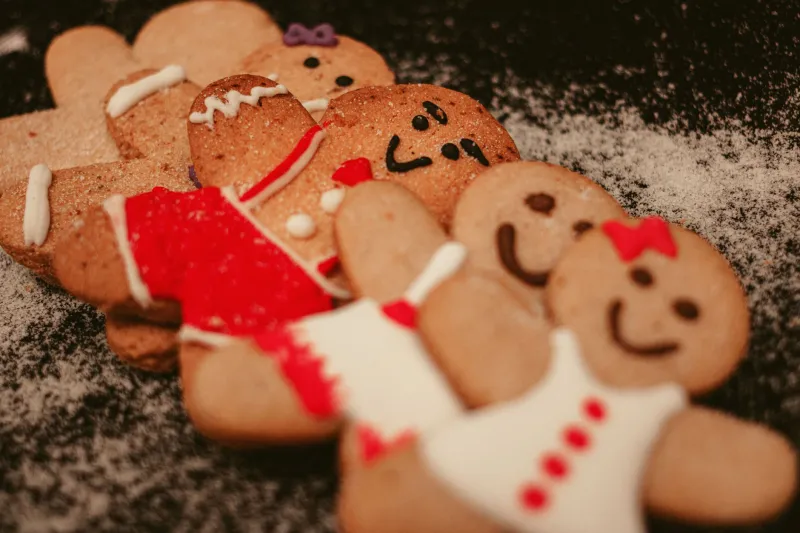
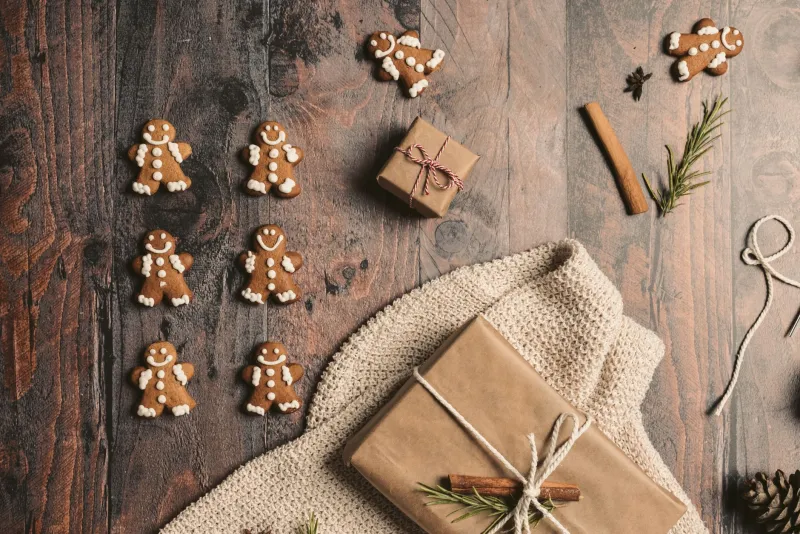
Paper bags are the classic for a reason: cheap, charming and easy to label. Choose a slightly thicker paper, fold the top over twice, and seal with a sticker or a wax seal. Cellophane looks smart but can tear and feels a little dated; a small kraft box with a paper band is more forgiving. For fudge, a box is better than a bag. For gingerbread, a paper bag with a window is lovely — but only if the gingerbread is not going to be crushed under a place card.
Whatever you choose, test one. Put it in your own bag, sit down, stand up, and jiggle it about. If it survives that, it will survive a wedding.
Budget-friendly without looking it
There is a strange assumption that wedding favours must either be expensive or look it. Neither is true. A small piece of proper fudge, wrapped neatly, can cost less than two pounds and still feel generous. A gingerbread heart iced with the couple's initials is the same. A wrapped slice of madeira or fruit cake, labelled with the date, is practically a heirloom.
The trick is scale. You do not need a huge portion; you need a good one. A generous-looking small item beats a stingy large one. Spend your money on the thing people taste, not the ribbon they throw away. If your budget is tight, choose one really good sweet per guest and put your effort into a handwritten-style label. If you have a little more room, a small box with two or three different sweets — fudge, a butter tablet, a piece of gingerbread — feels like a proper gift.
Seasonal flavours from the Lakes
A wedding in May is not the same as a wedding in October, and your favours should know that. In spring, think lemon and elderflower, light vanilla fudge, small shortbread rounds. Summer calls for raspberry, strawberry and cream flavours, or a plain buttery tablet that does not melt into a puddle in a warm marquee. Autumn is damson, blackberry, ginger and cinnamon — proper warming stuff. Winter weddings suit orange, clove, treacle and a rich dark gingerbread.
Using a seasonal flavour is also a quiet nod to the landscape. A damson sweet in September feels like it belongs in Cumbria. A lavender shortbread in June feels like the garden at the back of the shop. That is the sort of detail guests notice without quite knowing why.
The Cumbrian touch that makes it personal
A favour becomes memorable when it says something. A plain box of fudge is nice; a box of fudge with a tiny tag reading 'Made in Keswick — thank you for coming' is a keepsake. You do not need to overdo it. A small map of the Lakes on the label, the name of the fell you can see from the venue, or a simple line about the shop that made it — any of these turn a sweet into a story.
If you are ordering from a local bakery or sweet shop, ask what they can do. Many will print or write labels, tie ribbons, or put together mixed boxes. At our counter, we have seen couples choose a single wrapped cake slice with a printed wrapper, and we have seen full hampers for the top table. Both work. The right answer is the one that feels like you, not like a wedding magazine.
The take-home test
In the end, the best wedding favour is the one that disappears from the table before the dancing starts. If guests are eating it on the way to the car, or tucking it into a coat pocket for later, you have got it right. Keep it edible, keep it local, keep it simple, and order a few extra. The only thing worse than a forgotten favour is running out before the band has played its first song.