When the Fells Send Damp Air: Reading Cumbrian Weather at a Keswick Sweet Counter

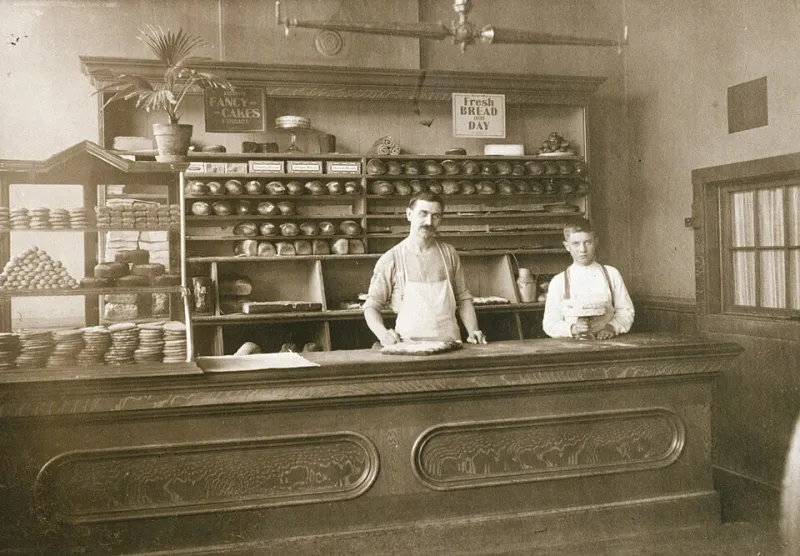
Photo: Cumbrian bakery counter fudge cakes rainy Keswick shop window, via www.nps.gov
Keswick has a particular kind of weather. It is not always dramatic. Sometimes it is simply soft, grey and persistent, the sort of damp that settles on the shoulders of Skiddaw and drifts down towards Derwentwater before anyone has finished their first coffee. For most visitors, that is a cue for a waterproof. For a sweet shop, it is a cue to look at the hygrometer before the first tray comes out.
Sugar is sensitive. That is the short version. The longer version is that fudge, fondant, pastry and chocolate all respond to the air around them, and in a Cumbrian town built beside a lake and ringed by fells, the air is rarely neutral. A bakery’s day is not just shaped by orders and ovens. It is shaped by humidity, temperature and the honest possibility of rain arriving before the lunchtime rush.
The first ten minutes behind the counter
Before the kettle goes on, someone checks the room. Not in a theatrical way — there is no weather station with blinking lights by the till — but in the ordinary, practical way a baker learns to work. A wall hygrometer gives a number. The windows give a feeling. The floor by the back door gives another clue entirely.
On a dry, cold morning, the shop feels crisp. Fudge sets with a clean snap. Pastry behaves. Chocolate can be handled without blooming at the edges. On a damp morning, everything takes a little longer. The air feels heavier, the paper bags soften at the fold, and the display counter seems to fog up out of sheer spite.
That is when the day gets adjusted. The dehumidifier may go on earlier. Trays are spaced further apart. A batch of fudge might be cooked to a slightly different point, or left to cool in a drier corner rather than by the window. None of this is glamorous, but it is the quiet craft of a sweet shop in a wet climate.
Fudge is honest about the weather
Fudge tells you almost immediately when the air is against it. Too much moisture and it can turn sticky on the surface, or lose the firm, yielding bite that makes it worth buying. Too little and it can become crumbly, though that is a less common problem here.
In a Keswick kitchen, fudge is made in small enough batches that the person stirring can respond to what is happening. The sugar is not left to its own devices. Glucose or a little careful timing may help keep the texture smooth. The cooling tray is chosen with one eye on the radiator and one eye on the door. When the weather is particularly close, the shop may simply make less and sell it faster, which is no bad thing for anyone standing at the counter.
Visitors often ask why the fudge here tastes different from fudge bought in a sealed packet from a supermarket. Part of the answer is freshness. Part of it is the climate it was made in. A Cumbrian sweet shop cannot pretend it is working in a laboratory. It works in a town where the weather comes in over the fells and makes itself at home.
Fondant, pastry and the display counter
Fondant is less forgiving. It can sweat in humid conditions, developing a faint shine that looks like a flaw and is really just physics. Cakes decorated with fondant need to be kept cool and dry, but not so cold that condensation forms when they come back to room temperature. That is why a display counter is not simply a pretty box. It is a small climate of its own.
Pastry has the opposite problem in some ways. It likes cool conditions, but damp air can make laminated dough feel clammy and difficult to handle. Chilling helps. So does working quickly and keeping the dough covered. A bakery that makes pastries in November knows that the weather outside will try to join in.
Then there is the counter itself. Chocolate-coated treats, fudges, fondant cakes and biscuits all share a space, and they do not all want the same thing. The shop’s job is to find a balance: cool enough for the chocolate, dry enough for the fondant, airy enough that nothing sits in a stale pocket of damp. It is not a perfect science. It is a daily negotiation.
Packaging for a damp climate
A paper bag is part of the pleasure of buying sweets. It is also not a long-term storage solution. In wet weather, the bag itself can pick up moisture on the walk back to a cottage or guesthouse. That is fine for an hour. It is less fine overnight.
At the counter, we tend to suggest a tin or an airtight tub for anything that needs to survive more than a day. Fudge, biscuits and chocolate all prefer a cool, dry cupboard to a windowsill, a radiator shelf or the top of a fridge. Cake boxes should be kept level and out of the car boot if possible. A damp afternoon in a car park can do more damage than a short walk in the rain.
For visitors heading home, the rule is simple: buy the treat for the journey, but pack the treat for the destination. If you are driving back over Kirkstone Pass or catching the train south, a tin is kinder than a bag. If you are walking back to a holiday let, keep the bag out of a wet rucksack pocket and decant it as soon as you are through the door.
What visitors can learn from a wet Cumbrian morning
You do not need a hygrometer to enjoy a Keswick sweet shop. But a little weather awareness helps. Do not leave a boxed cake in a hot car while you climb Catbells. Do not store fudge next to a kettle. Do not assume the fridge is always the answer — chocolate can bloom and cake can dry out in cold air.
If you are buying gifts, ask how long they need to last and how far they are travelling. A shop that makes its own bakes would rather send you away with the right advice than have you discover a sticky fudge three days later in a hotel room. That is not upselling. It is just good sense, born of living in a damp valley.
A shop that works with the weather
The romance of a Cumbrian bakery is easy to see: warm lights, paper bags, the smell of sugar and butter. The practical side is just as real. Every morning, the weather comes in. Every morning, the counter adjusts. Fudge is watched, fondant is sheltered, pastry is chilled, and the dehumidifier earns its place in the back room.
Keswick’s climate is part of what makes the town feel like itself. It is also part of what makes the baking interesting. A sweet shop here cannot ignore the fells and the lake, even from behind a till. The damp air is in the forecast, in the walls and sometimes in the paper bag. The best response is not to fight it, but to read it, work with it, and send the cake home in a tin.