Every Guest, Every Plate: Navigating Allergies and Free-From Treats at a Keswick Sweet Shop
There is a particular sound in a Keswick sweet shop on a wet Tuesday: the bell above the door, the rustle of paper bags, and the low hum of someone asking, very politely, whether the gingerbread contains nuts. It is not an awkward question. It is the sort of question that keeps the counter generous rather than guarded.
A traditional sweet counter can feel like a wonderful puzzle when dietary needs are in the mix. Gluten-free, vegan, nut-free — sometimes all three at one table. The good news is that a proper Cumbrian bakery does not need to retreat into a sad little shelf of worthy biscuits. It needs labels, tongs, a clean surface, and a bit of straight talking. Here is how we approach it at Sweet Treats in Keswick, and how you can ask without feeling like you are causing a fuss.
The counter is not a clinic
First, a gentle truth: a small sweet shop is not a hospital. We can tell you what is in a bake, what it shares a kitchen with, and how it has been handled. We cannot promise a completely allergen-free environment unless a product is made and sealed off-site. That honesty matters. What we can do is help you choose well, and make the whole thing feel less like a dietary obstacle course and more like a normal, pleasurable visit.
If you have a serious allergy, always say so at the start. Not as a confession — as a practical instruction. Staff would much rather fetch a clean knife, a fresh tray, or a sealed packet than watch you leave with nothing.
Gluten-free: look for the bakes that never needed flour
Some of the best gluten-free treats are not substitutes at all. They are puddings that happen to be flourless. A dark chocolate torte, a proper meringue, a set custard, a tray of fudge made with cream and sugar — these can be naturally gluten-free, though the label still needs checking. Oats are a common trap, as are some icing sugars and decorative crumbs.
At the counter, ask: is this made with wheat flour, or does it share a tray with something that is? A flourless cake cut with a clean knife and served on a fresh slip of paper is a different proposition from a slice lifted from beside a Dundee cake. Neither is wrong. They are just different, and you deserve to know which one you are getting.
If you are building a gift box for someone gluten-free, sealed confectionery is your friend. Think wrapped fudge, coconut ice, dark chocolate bars, and boiled sweets with clear ingredient lists. A little bag of Cumbrian mint cake can travel beautifully — but check the wrapper, because recipes vary.
Vegan: sweets without the butter, cream or honey
Vegan visitors often assume a sweet shop is a no-go. It is not. The traditional boiled sweet counter is surprisingly vegan-friendly: pear drops, lemon sherbets, aniseed balls and many fruit gums are made from sugar, glucose, flavourings and colours. The catch is gelatine, beeswax, shellac and certain red colourings, which appear in more sweets than you might expect. Marshmallows and many gummies are out. Turkish delight is often in, but not always.
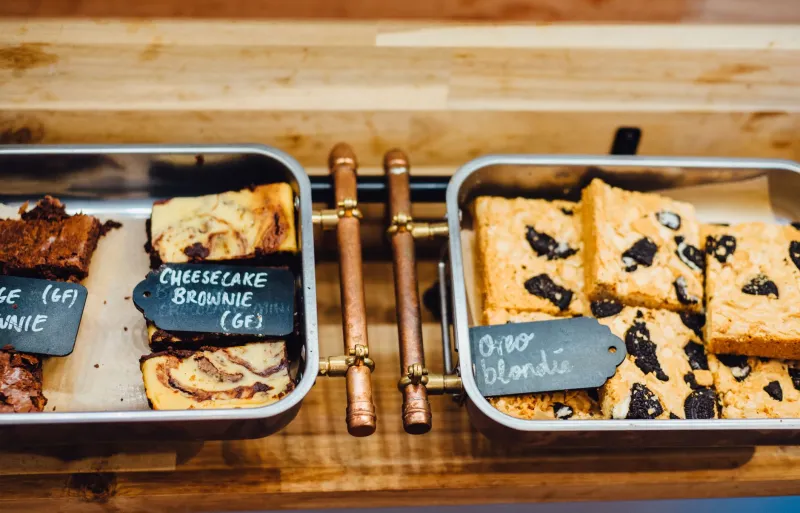
In the cake case, look for bakes made with oil rather than butter, and plant milks rather than cream. A dark chocolate and beetroot brownie, an oat flapjack, a fruit loaf — these can be lovely without any ceremony. Ask whether the margarine used is dairy-free, and whether the chocolate is dark enough to avoid milk solids. A good rule: if the person behind the counter has to go and read the tub, that is a good sign, not a bad one.
For a vegan gift, a paper bag of boiled sweets and a bar of good dark chocolate looks generous and travels well. Add a little jar of local jam and you have a present that feels considered rather than compensatory.
Nut-free: the question of the shared kitchen
Nut-free is where the sweet counter needs the most care. Marzipan, praline, nut brittle and some chocolate coatings are obvious. Less obvious are the cakes decorated with crushed nuts, the fudge made on the same slab, and the biscuits that share a tray with almond macaroons. A tiny bakery kitchen is not a laboratory. Cross-contamination is a real possibility, and it is better said aloud than glossed over.
If you are nut-free, ask about the whole journey: ingredients, surfaces, utensils, and storage. Some visitors are fine with a product that contains no nuts but is made in a kitchen that handles them; others are not. Both positions are reasonable. The counter's job is to give you the information, not to decide for you.
How to ask without missing out
A few phrases make the whole exchange easier. Instead of 'Is this gluten-free?', try 'What would you recommend for someone who cannot have gluten?' Instead of 'Is this vegan?', ask 'Which of these have no butter, milk or honey?' Instead of hovering, say 'I have a nut allergy — can you tell me what is safe and how it is handled?'
If the shop has an ingredient folder, ask to see it. If the label is unclear, ask staff to check the tub. If you are buying for a group, ask for sealed items and separate bags. None of this is unreasonable. A good sweet shop would rather spend five minutes with the ingredient book than send a family away with a bag of nothing.
A generous table, not a separate shelf
There is a temptation, when dietary needs appear, to create a tiny corner of the counter and call it inclusive. We would rather not. The aim is a table where the gluten-free guest, the vegan aunt and the nut-free child all have something worth unwrapping. It might be a flourless chocolate cake, a bag of pear drops, a sealed fudge bar, or a slice of fruit loaf that happens to suit. It does not need to be the same bake for everyone. It just needs to feel like everyone was expected.
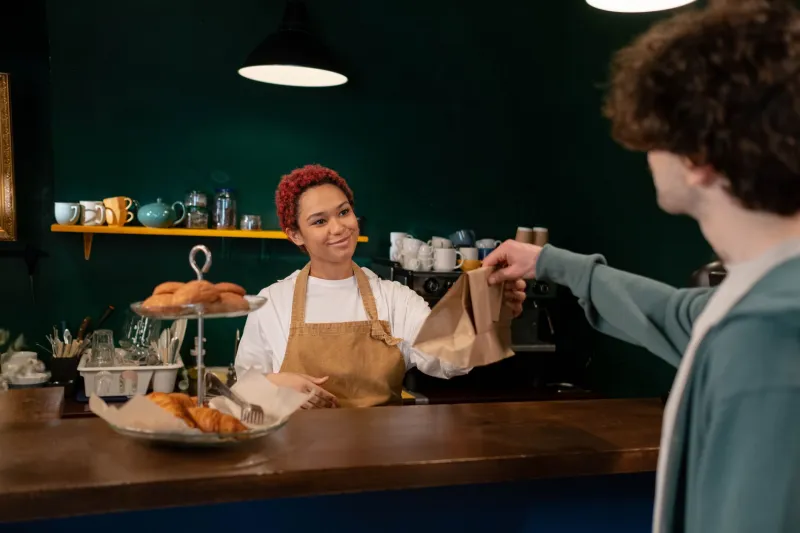
So next time you are in Keswick — after a walk round Derwentwater, perhaps, with the rain coming sideways off Skiddaw — come in and ask. The counter is not a test. It is a conversation, and there is usually a paper bag at the end of it.